
Studio Apartment Accessories: The Renter’s Complete Buying Guide (That Actually Works)
Studio apartment accessories are one of the most searched decorating topics online — and one of the most frustrating to act on. You find beautiful rooms. You buy the things. And somehow, your apartment still looks like a furniture warehouse that had a throw pillow delivered to it.

Accessories fail not because you chose the wrong ones, but because you placed them in a space that wasn’t ready for them. Accessories are the final layer. If the foundation isn’t right — wrong rug size, no layered lighting, furniture floating in empty space — no number of objects will fix it.
This guide treats accessories as problem-solvers, not decorations. Every product below is here because it fixes a specific issue real renters deal with in real studios. Written for renters specifically — because your constraints (no drilling, no painting, no permanent changes) are real and deserve real solutions.
Still guessing at design rules?
The Designer’s SECRET Cheat Sheet gives you 119 professional formulas — measurements, layout rules, and accessory placement guides that eliminate the guesswork entirely. It’s the shortcut professional designers actually use.
Get The Guide →in one guide
📋 What You’ll Learn in This Guide
- Step 1: The Accessory Foundation — What Goes First
- Step 2: Rugs — The Most Important Accessory You’ll Buy
- Step 3: Lighting Accessories That Change Everything
- Step 4: Color, Mood & Texture — The Emotional Layer
- Step 5: Storage Accessories That Double as Decor
- Step 6: Surface Accessories — Tables, Shelves & Mirrors
- Step 7: Wall Accessories for Renters (No Drill Required)
- Step 8: Decorative Accessories — The Personality Layer
- The Vibe Check — Match Accessories to Your Style
- Real-Life Fixes for the 5 Most Common Studio Problems
- The Budget Planner — What to Spend & When
- The Designer’s Accessory Cheat Sheet
- Visual Anti-Patterns to Avoid
- Shop the Look — All 12 Picks Reviewed
- Upcoming Trends Worth Knowing
- FAQ
Step 1: The Studio Apartment Accessory Foundation — What Goes First

Before buying a single accessory, your furniture layout needs to be set, your zones defined, and your style direction chosen. Accessories placed in an unplanned room will always look random — not intentional. The sequence matters as much as the selection.
The most common studio decorating mistake isn’t buying the wrong accessories — it’s buying them before the room is ready. You move in, the walls feel bare, so you head straight to Amazon. Six months later the space still feels off and you can’t figure out why. The objects are fine. The room wasn’t ready for them.
“Accessories should be the punctuation at the end of a well-written sentence — not words you’re hoping will form a sentence on their own.” — Nate Berkus, Interior Designer
Every studio needs at minimum three zones: sleeping, living, working/eating. Mark them before buying anything. Every accessory should belong to a specific zone — not “the room.”
The rug comes before any decorative accessory. It’s spatial architecture, not decoration. Size it up — not down. 8×10 minimum for your living zone.
Add a floor lamp at minimum. Overhead lighting alone kills the atmosphere in any studio — no matter how beautiful your accessories are under flat, harsh light.
Storage ottomans, nesting tables, mirrors — things that solve spatial problems while looking good. These earn their floor space by doing two jobs at once.
Art, plants, vases, sculptures. These are the personality layer. They go last — always. Buying them first is the most expensive decorating mistake a renter can make.
Step 2: Rugs — The Most Important Studio Apartment Accessories You’ll Ever Buy

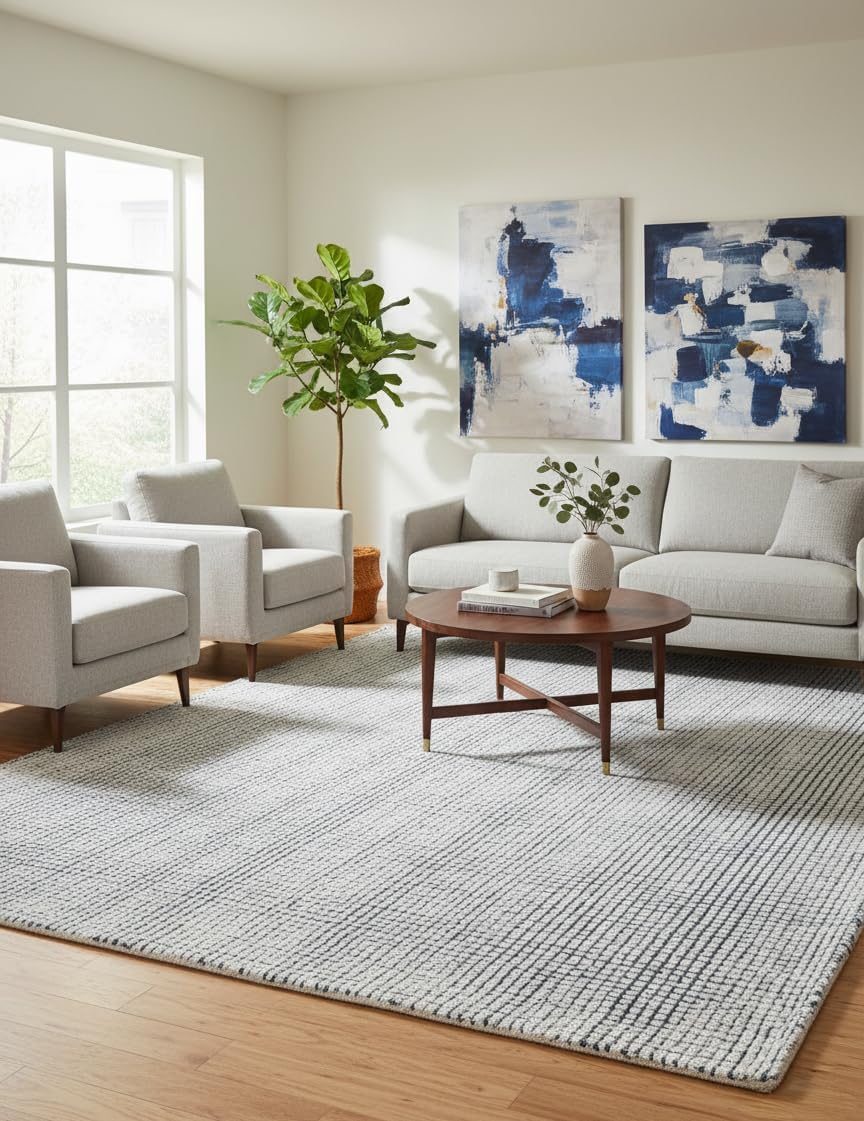
A properly sized area rug is the single highest-impact accessory in any studio apartment. It defines zones, adds warmth, reduces sound, and makes the entire space feel designed. If your budget is limited, spend it on the rug before anything else — it delivers more visual transformation per dollar than any other purchase.
Nothing makes a studio look more unfinished than a rug that’s too small. This is the number-one mistake designers see — a 5×7 rug floating in the middle of a living zone with furniture legs dangling off its edges. It doesn’t make the room look bigger. It makes the room look like you almost decorated it.
Designer Strategy: Scale & Placement
- The Front-Legs-On Rule: All front legs of your sofa and chairs should sit on the rug. This visually anchors the furniture to the zone. When furniture floats off the rug edges, the room reads as unresolved — even subconsciously.
- Studio Sizing Formula: For a typical studio living area, 8×10 is the minimum. Open-plan studio? Go 9×12. A rug one size too large looks luxurious. A rug one size too small looks like an afterthought.
- The Two-Rug Strategy: Use two rugs — one in the living zone (8×10 minimum) and a smaller one (5×7 or a runner) in the sleeping area. This creates clear spatial separation without building anything or spending on furniture dividers.
Impact Score: Studio Accessories Ranked by Visual Transformation
Step 3: Lighting Accessories That Change Everything

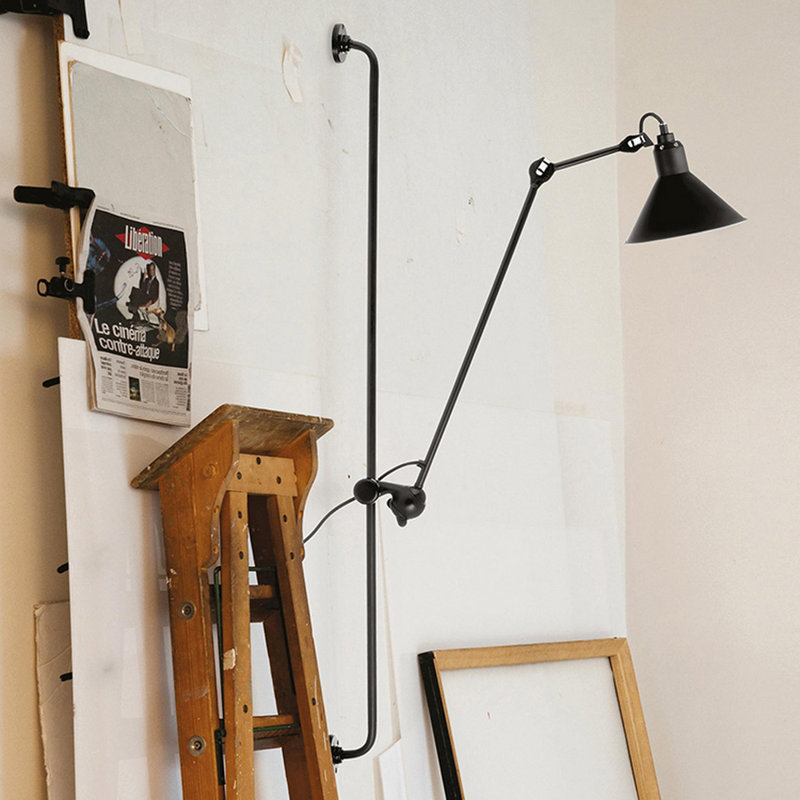
Lighting is the most underrated studio apartment accessory. A floor lamp and a plug-in wall sconce cost less than $200 combined and will transform your studio’s mood more dramatically than almost any other change. Overhead lighting alone makes every room feel like a waiting room — no matter how good the rest of your accessories are.
Overhead light illuminates everything at equal intensity, flattening every surface, texture, and shadow. It eliminates the depth cues that make a space feel rich and livable. Your carefully chosen rug, your textured throw, your styled shelf — all visually compressed under a single ceiling fixture. The fix isn’t expensive. It’s a floor lamp and a bulb swap.

Step 4: Color, Mood & Texture — The Emotional Layer

Color and texture accessories set the emotional temperature of your studio — they determine whether the room feels warm or cold, calm or chaotic, finished or half-done. You don’t need more color; you need the right color story. One dominant neutral, one warm accent tone, and one key texture material is a complete, professional color strategy for any studio.
Most renters default to white or gray because it feels safe. But safe in a studio often reads as unfinished — a room with no temperature, no mood. Color and texture accessories fix that without touching a wall.
Designer Strategy: Color, Mood & Texture
- Use one statement color moment: A deep terracotta throw, a forest green ceramic vase, a charcoal cushion — one deliberate color accent tells the room’s visual story. More than one accent and you have a debate, not a direction.
- Warm your neutrals: Off-white, linen, warm greige, and sand tones feel intentionally designed. Swap one white accessory for a warm equivalent and notice the difference immediately.
- Layer texture before more color: A wool rug, a linen throw, a ribbed ceramic vase add visual richness without competing colors. Texture is what separates a finished room from a showroom.
Warm Camel & Sand
The most versatile studio neutral. Works with wood, leather, linen, and ceramic. Feels warm without reading orange. The default starting point for any studio palette.
Forest Green
The single most effective accent in a neutral studio. Grounds the room, adds life, and doesn’t compete with other elements. One green object — vase, plant, throw — is enough.
Charcoal & Near-Black
Use in small doses — a lamp base, a frame, a sculpture. Dark accents create visual weight that keeps a room from feeling washed out under warm light.
Terracotta & Clay
The warmest accent option. Use in ceramic accessories — it photographs beautifully and ages well. One terracotta vase can warm an entire neutral room without a single wall change.
Step 5: Storage Accessories That Double as Decor

In a studio apartment, every accessory must earn its floor space. Storage accessories — ottomans, bookcases, over-toilet shelves — solve chronic clutter while adding visual structure. The best ones are virtually indistinguishable from pure decor pieces to anyone who visits.
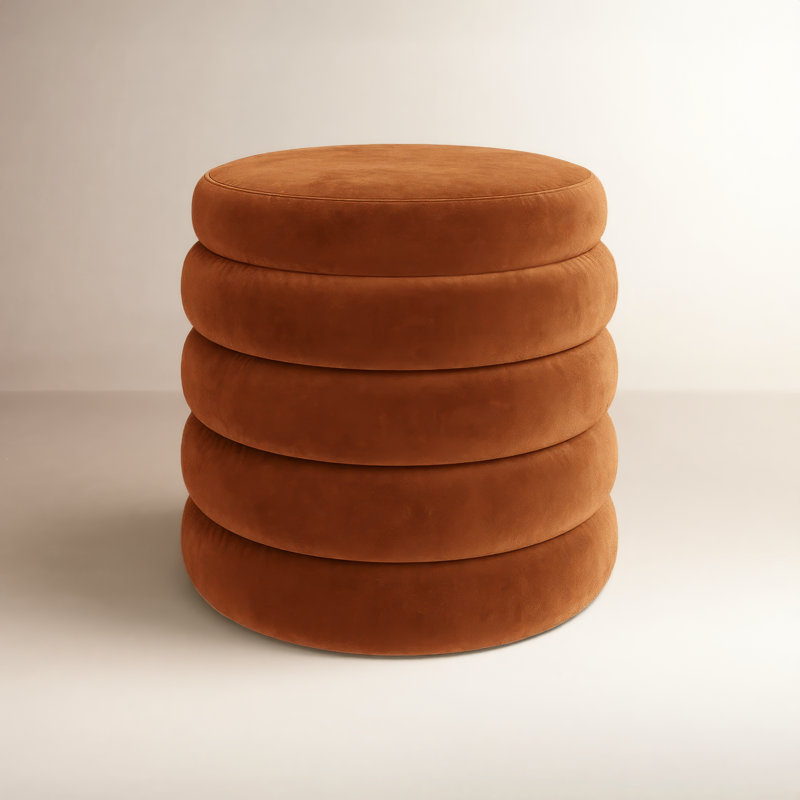
A well-chosen storage ottoman doesn’t read as “storage.” It reads as a coffee table, footrest, and guest seat — that also happens to hold your extra blankets and charging cables out of sight.

Step 6: Surface Accessories — Tables, Shelves & Mirrors

Surface accessories — nesting tables, lift-top coffee tables, and floor mirrors — solve the studio’s core spatial challenges: lack of surface area, limited storage, and visual compression. These pieces do double and triple duty in ways single-function furniture never can.
Surface Accessory Decision Matrix
Nesting Tables
- Expand when needed, tuck away after
- Work as side tables or dining surfaces
- No permanent footprint
- Best for: micro studios, solo renters
Lift-Top Coffee Table
- Dining surface + coffee table in one
- Hidden interior storage
- Perfect for WFH laptop use
- Best for: open floor plan studios
Oversized Floor Mirror
- Doubles perceived room size
- Reflects and amplifies natural light
- No installation — just lean
- Best for: dark or narrow studios


Step 7: Wall Accessories for Renters (No Drill Required)

Renters can create a fully styled studio apartment without drilling a single hole. Floor-leaning mirrors, gallery-style propped art, peel-and-stick wallpaper on one accent wall, and Command-strip-hung frames handle 95% of what a homeowner achieves with a drill — and several of these approaches look more intentional than traditional wall hanging anyway.
Empty walls make any studio feel unfinished and temporary. Research in environmental psychology consistently finds that visually incomplete spaces elevate stress and reduce the sense of comfort and belonging.

Step 8: Decorative Accessories — The Personality Layer

Decorative accessories — sculptures, vases, and curated objects — are the final layer of a well-designed studio. They go last, get grouped in odd numbers, and should reflect your actual personality rather than a trend you found last Tuesday. These are the pieces that make a room feel inhabited rather than staged.
A beautiful ceramic vase on a bare, unlit shelf in a poorly zoned room is just an object. The same vase on a styled, well-lit bookcase in a room with clear zones and a warm rug beneath it is a design statement. The object didn’t change. The context did. Apply the designer’s rule of three: one tall element, one mid-height, one low. Vary materials. Leave 40% of the surface empty.
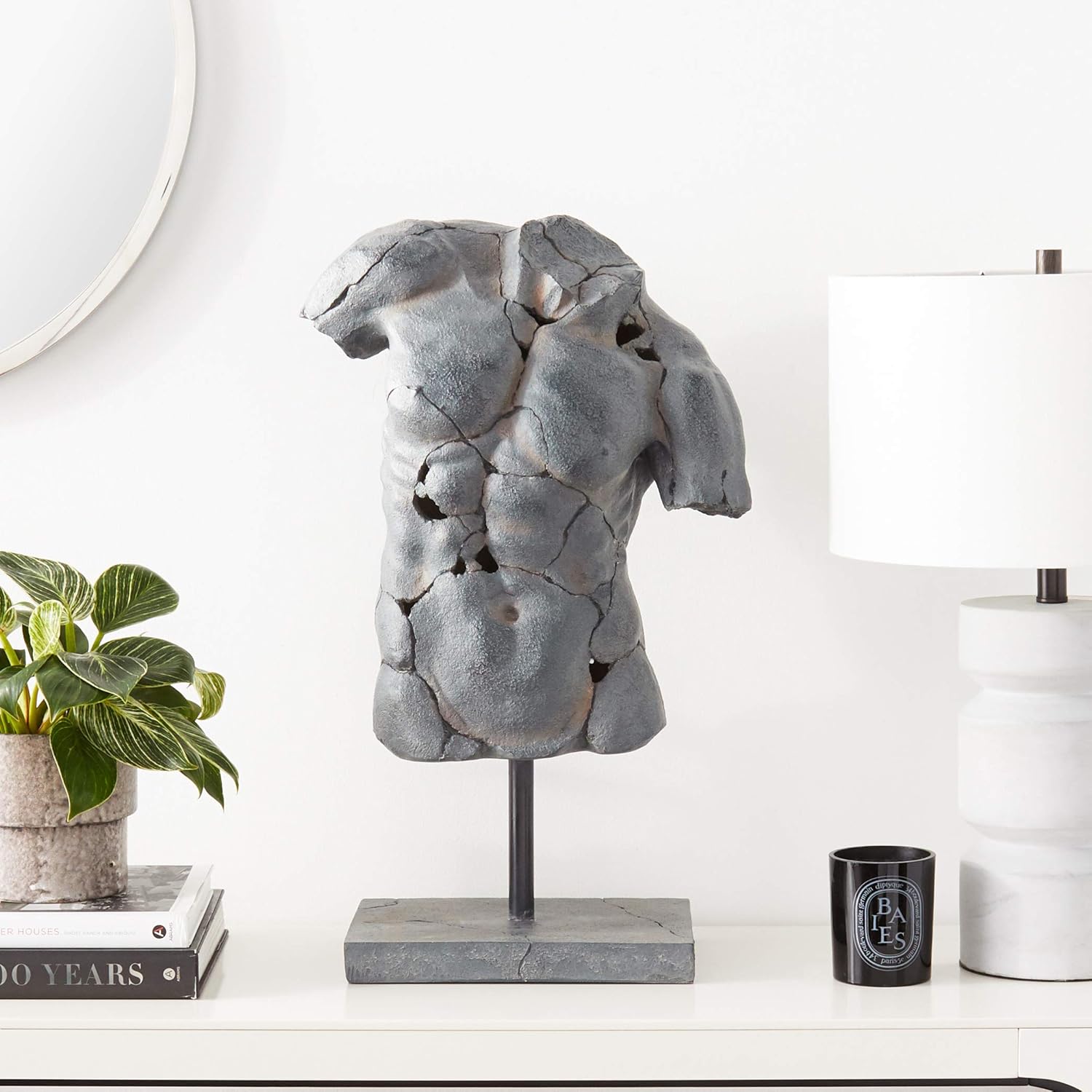

The Vibe Check — Match Your Accessories to Your Style

Choosing studio apartment accessories without a defined style direction leads to visual noise — a room that looks collected rather than curated. Pick one clear aesthetic before shopping and commit to it across every category. The four most effective styles for renters in 2026 are below — pick yours before you open a single product tab.
Warm Minimalist
Off-white, natural wood, linen textures. Calm and approachable. Every object has a clear reason for being there. The most livable and forgiving style for studio apartments.
Modern Noir
Dark palette, matte black accents, sculptural objects. Confident and bold. Accessories are architectural statements. High contrast, high impact, distinctly intentional.
Organic Modern
Earthy tones, curved forms, tactile layers. Warm without being rustic. Natural materials throughout — rattan, clay, linen, stone. The fastest-growing renter style in 2026.
Mid-Century Modern
Walnut, amber, tapered legs, graphic patterns. Every piece has a strong silhouette. Works well in studios with character architecture — exposed brick, older buildings with history.
Real-Life Fixes for the 5 Most Common Studio Accessory Problems
These are the actual complaints in Reddit’s r/malelivingspace and r/femalelivingspace threads, TikTok decorating comments, and Facebook apartment decor groups — every day. Not theoretical problems. Real ones with real solutions.
“My shelves are styled but still look empty and random”
This is almost always an odd-number problem combined with a height problem. Three objects of wildly different heights look editorial. Three objects of the same height look like inventory.
“My room looks fine in daylight but depressing at night”
Your room is entirely dependent on overhead light — and overhead light after sunset is the design equivalent of hospital fluorescents. This is the most fixable problem in this guide and costs under $200 to solve completely.
“My studio feels like one giant room with no sense of separation”
Spatial ambiguity — your brain can’t fully relax in any zone because it doesn’t clearly know which zone it’s in. This isn’t a furniture problem — it’s an accessory placement problem.
“I can’t hang anything without risking my deposit”
The renter wall constraint is real — but it’s far more solvable than most guides acknowledge. Several no-damage solutions genuinely look better than traditional hung art.
“My studio has no surface space — everything just piles up”
Surface scarcity is one of the most frustrating realities of studio living. The key is buying accessories that create new surfaces rather than just sitting on existing ones.
❌ Before
- — Single overhead light; room dead after dark
- — Too-small rug; furniture floating off edges
- — Empty or cluttered shelves with no logic
- — No zone separation; one giant open space
- — Bare walls out of deposit fear
- — No surface space; everything on one table
- — Accessories bought before furniture was settled
✓ After
- → Floor lamp + sconce; room glows warmly at night
- → 8×10 rug; all front legs anchored and grounded
- → Rule-of-three groupings; 40% negative space
- → Bookcase divider; two rugs; zones feel distinct
- → Leaning mirror + propped art; walls look finished
- → Nesting tables + ottoman tray; surfaces everywhere
- → Foundation complete first; accessories land perfectly
The Budget Planner — What to Spend and When
A complete studio apartment accessory transformation typically costs $730–$1,200 in the mid-range tier. Spend the most on accessories that cover the most visual square footage — your rug and your lighting. Spend the least on decorative objects, which can be added gradually without the room suffering in the meantime.
| Accessory Category | Budget Range | Priority | Why It Matters Most |
|---|---|---|---|
| Area Rug (8×10 min) | $120–$350 | Buy First | Anchors the entire room. Without it, nothing else works correctly. |
| Floor Lamp | $80–$220 | Buy Second | Transforms mood instantly. Everything looks better under warm layered light. |
| Floor Mirror (large) | $80–$200 | Buy Third | Doubles light and perceived space. Renter-friendly — no installation required. |
| Storage Ottoman | $100–$280 | Round 2 | Solves coffee table + storage + seating in one purchase. |
| Nesting Tables | $80–$200 | Round 2 | Creates flexible surface space with no permanent floor footprint. |
| Plug-In Wall Sconce | $50–$150 | Round 2 | Completes the 3-source lighting layer. No drilling required. |
| Wall Art (framed set) | $60–$180 | Layer In | Personality layer — impactful but only lands well after foundation is set. |
| Bookcase (as room divider) | $120–$350 | Layer In | Major upgrade — adds zoning, storage, and display simultaneously. |
| Decorative Objects | $40–$150 | Layer In | Final personality layer. Buy last. Can wait without hurting the overall look. |
| Total Estimated (Full Kit) | $730–$2,080 | — | Budget tier starts ~$730. Phase over 2–3 months for manageable spending. |
The Designer’s Studio Accessory Cheat Sheet
These are the exact formulas designers apply to every project. Screenshot this before you shop for a single thing.
The 57″ Art Rule
Center of every art piece = 57 inches from floor. Always — whether hung, leaned, or propped.
Rug Sizing Rule
8×10 minimum for most studios. All front furniture legs on the rug — no exceptions.
The 3-Light Rule
Every room needs 3 light sources at 3 heights. Overhead is optional. Warmth and depth are not.
Odd Number Rule
Group accessories in 3s or 5s. Even numbers feel stiff. Odd numbers feel curated and alive.
Mirror Placement Rule
Place mirrors opposite light sources to double perceived light and expand the room visually.
40% Shelf Rule
Leave 40% of every shelf empty. Negative space makes objects look intentional, not hoarded.
Color Story Rule
One dominant neutral + one warm accent + one key texture material = a complete color story.
18-Inch Clearance Rule
Leave 18 inches between sofa edge and coffee table. Less feels cramped. More feels disconnected.
Bulb Temperature Rule
Always 2700K–3000K warm white. Cooler bulbs make every accessory look washed out and clinical.
Want all 119 rules in one place?
The Designer’s SECRET Cheat Sheet is the shortcut professional designers use — 119 rules covering every room, every measurement, every placement formula. Stop second-guessing every purchase. Start decorating with confidence.
Get The Cheat Sheet →one guide.
Visual Anti-Patterns: What NOT To Do With Studio Accessories
These are the accessory moves that feel right in the store and look wrong in the room. Most studios in the “why doesn’t mine look like Pinterest?” category share at least three of these — usually without realizing it.
⚠ Common Studio Accessory Mistakes
Fix → A small rug makes the room look worse — unresolved and almost-decorated. Size up. The 8×10 rule never fails.
Fix → Mix materials — wood, ceramic, metal, linen — within the same color family. Coordinated reads as designed. Perfectly matched reads as a hotel room package deal.
Fix → 57 inches to center, every time. Art at ceiling height disconnects from the furniture below and creates a visual gap that makes the room feel unsettled.
Fix → Accessories go last — always. If the room doesn’t feel right before accessories, no number of objects will fix it. Furniture, rug, lighting — then accessories.
Fix → Three well-chosen objects with breathing space always beats twelve crammed together. Edit ruthlessly. Negative space is itself a design element.
Fix → Add a floor lamp before any decorative accessory — it’s that impactful. Every room you’ve admired had at least three light sources. Not one.
Fix → Pick one aesthetic before opening a single product tab. One off-theme piece is character. Three is visual noise. The Vibe Check section above takes five minutes.
Shop the Look — All 12 Picks Reviewed
Every product below was selected because it solves a specific studio problem while looking like something you chose deliberately. Designer commentary is honest — including what each piece doesn’t do well, so you buy with clear eyes.
Neutral Area Rug — The Studio Foundation
The foundation piece every studio needs before anything else. Warm neutral tones work across all four style directions without committing to a pattern that dates badly.
Waylon Floor Lamp — Living Zone Essential
Strong silhouette that reads as a design choice, not just a light source. Position in the corner of the living zone for maximum depth and shadow effect.
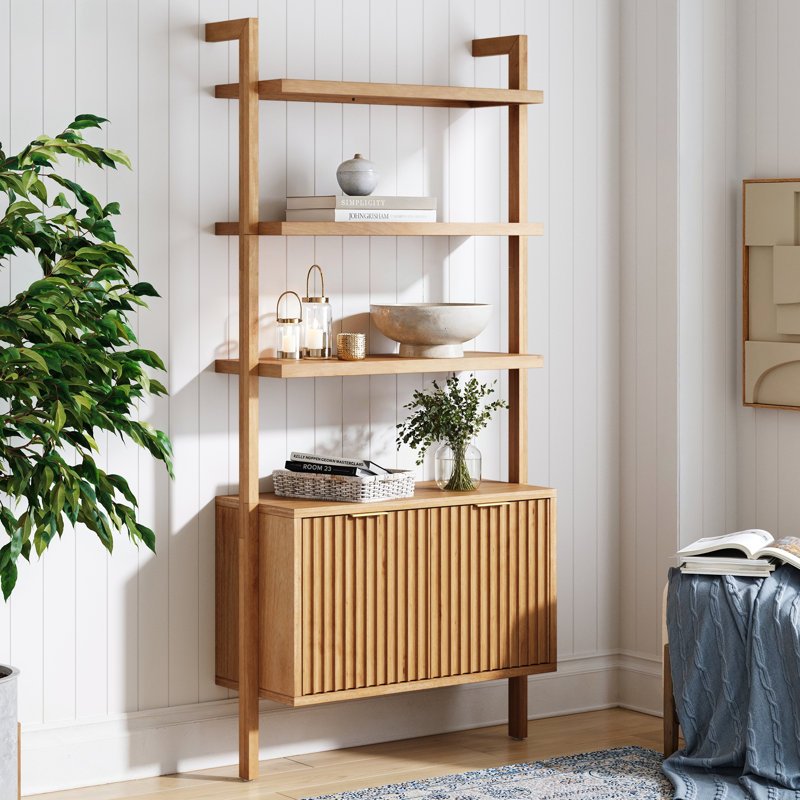
Multi-Tier Open Storage Bookcase — Zone Divider
Place perpendicular to the wall between your sleeping and living zones for instant spatial definition. Open back keeps light flowing. Stores books, objects, and baskets on every tier.
Cobers Iron Plug-In Swing Arm Sconce
Attach beside the bed with Command strips, tuck the cord behind the headboard, and your bedroom looks boutique hotel-quality. Adjustable arm for reading without disturbing anyone.
Jean Solid Mango Wood Nesting Tables (3-Piece)
Pull all three out for guests — tuck two back for daily living. The tray tops mean these are styled the moment you unwrap them. Warm mango wood works in organic modern and warm minimalist studios.
Neutral Framed Canvas Wall Art — 3-Piece Set
Neutral landscape photography in coordinated frames. Works hung with Command strips, leaned against a wall, or propped on a shelf ledge behind the sofa — all three look finished.
Over-Toilet Shelving Unit — Bathroom Storage
Studio bathrooms are almost always the most neglected space. This freestanding unit turns dead vertical space into styled storage without touching a single wall.
Helene Upholstered Storage Ottoman
Coffee table, footrest, hidden storage, and extra seating — all in one upholstered piece that looks like pure decor. Add a wooden tray on top for drinks and a styled surface moment.
Large Leaning Floor Mirror — Space Expansion
Position opposite your main window and this single piece makes your studio feel substantially larger. The optical doubling effect is genuine — adds perceived depth, light, and space.
Abstract Sculpture — The Shelf Anchor
Every styled shelf grouping needs a tall anchor element. Abstract form reads as intentional across all four style directions without looking trend-specific or dated.
Ekta Lift Top Coffee Table
Lift top raises to dining or desk height. Interior stores remotes, cables, and daily clutter completely out of sight. Cross-leg base is visually light — doesn’t crowd a small living zone.
Ceramic Vase Set — Organic Forms, Neutral Palette
Three heights in one set — use together for maximum shelf impact, or split across zones. Matte ceramic texture adds warmth that no glass or plastic alternative can replicate at this price.
Upcoming Accessory Trends Worth Knowing (2026)

These trends have staying power because they’re rooted in genuine lifestyle shifts — not aesthetic cycles. All four below will be relevant in three years. That’s the only test that matters for a renter investing in accessories.
Tactile Texture Objects
Handmade ceramics, ribbed vases, woven wall hangings. Visual richness through touch rather than pattern. One well-chosen textured piece reads as curated; ten do not. Invest in one excellent tactile object per zone and stop there.
Identity-First Accessorizing
Moving away from “aesthetic” apartments toward spaces that reflect actual life. Real books you’ve read, art from artists you follow, objects from places you’ve been. Authenticity is the new minimalism — and it costs nothing extra.
Warm Metal Accents
Brass, bronze, and aged gold replacing cool chrome in lamp bases, frames, and small decorative objects. Warm metals pair beautifully with neutral studio palettes and age without dating — unlike polished chrome, which shows every seasonal cycle.
Curved & Organic Forms
Rounded sculptures, oval mirrors, arched floor lamps. Curved shapes soften the hard geometric angles studio apartments accumulate — rectangular walls, square furniture, linear kitchens. One curved piece per zone is the formula.
Most Popular on The Ergo Workspace
Thousands of readers loved these — you might too
Your Studio Is One Layer Away from Finished
You don’t need more accessories — you need the right ones, in the right order, solving the right problems. Start with the rug. Add the floor lamp. Fix the lighting with warm bulbs. Layer in the storage pieces. Then add personality last. Your studio will feel designed rather than decorated — and you’ll notice the difference the moment you walk back in after a long day.
The transformation is repeatable, fully renter-friendly, and achievable in phases. You have the sequence, the rules, and every product reviewed honestly. The rug is the place to start.
Get The Designer’s SECRET Cheat Sheet →The Shortcut Professional Designers Actually Use
The Designer’s SECRET Cheat Sheet contains 119 designer-approved rules covering every room in your home — measurements, layout formulas, accessory placement guides, lighting rules, rug sizing, art heights, and every decorating shortcut that separates a well-styled home from a beautiful one. One guide. Zero guesswork. Permanent confidence in every decorating decision.
Stop Guessing. Start Styling. →every room.
one guide.
Studio Apartment Accessories — Frequently Asked Questions
What are the most important accessories for a studio apartment?
The highest-impact studio apartment accessories are a properly sized area rug (8×10 minimum), a floor lamp, a large leaning floor mirror, a storage ottoman, and scaled wall art. These five items solve the most common studio problems — poor zoning, flat lighting, visual compression, clutter, and bare walls — in priority order.
What size rug should I use in a studio apartment?
For a studio living zone, an 8×10 is the minimum and a 9×12 is ideal for open-plan layouts. All front legs of your seating furniture should sit on the rug. A rug that’s too small makes the entire room look miscalculated — it’s the single most common and most visible accessory mistake in studio apartments.
How can renters decorate studio apartment walls without drilling?
Use Command picture-hanging strips for lightweight frames, floor-lean large mirrors and art prints, apply peel-and-stick wallpaper to one feature wall, or use tall bookshelves to draw the eye upward. Floor-leaning art often looks more intentional than hung art and requires zero wall commitment from your lease.
What is the best accessory for making a studio apartment look bigger?
A large leaning floor mirror is the most effective space-expanding accessory. Placed opposite a window or light source, it doubles perceived light and creates the illusion of depth. After that, a correctly sized rug and furniture with exposed legs significantly increase perceived square footage without moving a single wall.
How do I stop my studio accessories from looking random?
Pick one clear aesthetic before shopping and apply it consistently across every accessory category — rug, lighting, art, objects. Group decorative items in odd numbers (3 or 5) with height variation. Leave 40% of shelving empty. Coherent style direction plus intentional negative space is what separates decorated from genuinely designed.
What lighting accessories should I buy for a studio apartment?
A floor lamp is the single most important lighting accessory — it adds warmth, depth, and mood immediately. A plug-in wall sconce is the renter-friendly upgrade that makes a bedroom look hotel-quality. Always use warm white bulbs (2700K–3000K). Overhead lighting alone makes every studio feel flat and uninviting after dark.
What accessories work as both decor and storage in a studio?
Storage ottomans, open bookcases, nesting tables with tray tops, lift-top coffee tables, and over-toilet shelving all function as both decorative elements and storage solutions. These dual-function pieces are essential in studios where every square foot must justify itself — they eliminate clutter without adding visual bulk.
How much should I budget for studio apartment accessories?
A complete studio accessory transformation typically runs $730–$1,200 in the mid-range tier. Start with the three highest-impact purchases: rug ($120–$350), floor lamp ($80–$220), and floor mirror ($80–$200). These three alone deliver the most visible transformation per dollar spent of any accessories you can buy.
Should I buy accessories before or after furniture?
Always after. Furniture, rug, and lighting form the foundation. Accessories are the final personality layer — they only land correctly in a space that’s already spatially resolved. Buying accessories before your furniture layout is settled results in pieces that don’t fit, don’t belong, and end up returned or stored in a closet.
What’s the biggest studio accessory mistake beginners make?
Shopping without a defined style direction. The result is a room of individually attractive pieces with no visual reason to coexist — noise instead of cohesion. Pick one aesthetic (warm minimalist, organic modern, modern noir, mid-century) and let it filter every purchase. That single decision is the difference between decorated and designed.
© The Ergo Workspace · This post contains affiliate links — we may earn a small commission at no extra cost to you. All product recommendations are our own, selected to solve specific decorating problems. We never recommend products that don’t earn their place in a well-designed room.
CATCH THE LATEST IN HOME DECOR TRENDS:
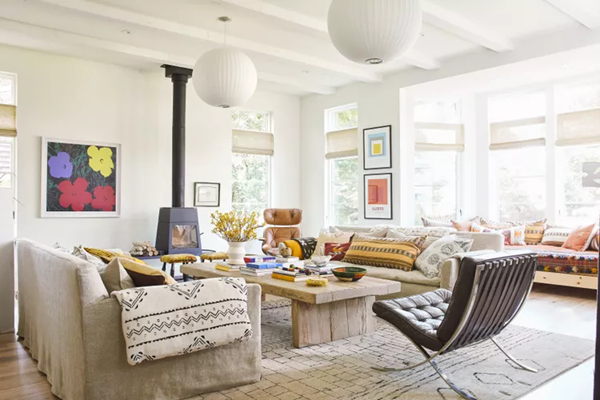
Steal These 16 Expert-Approved Decorating Secrets

How To Accessorize Your Living Room
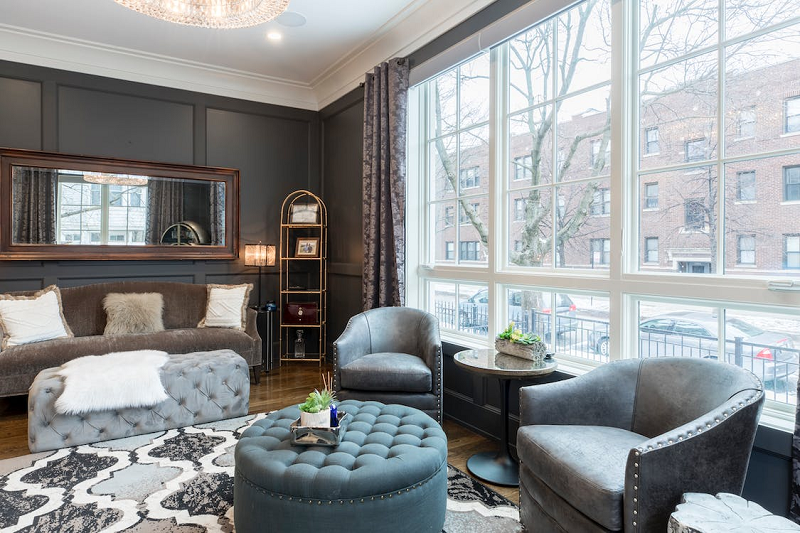
Small Space? 10 Ways To Make A Room Appear Bigger

Make Your space Look Expensive
GET CAUGHT UP ON ALL THE INSPIRING DECOR TIPS:
18 Fresh Decorating Ideas To Update Your Fireplace

How to Make a Gallery Wall: The Complete Step-by-Step Guide (Even If You’ve Never Hung a Picture)
